Lucien Putnam
Lucien Putnam
New York

This website isn’t only about me.It’s here in case you and I should know each other.

The best work often begins with a conversation.

I would like to know what you care about, what you are building, and how you see the world. If nothing else, I promise an enjoyable conversation.

A little more about me

I’ve always liked making things. As a kid, that meant software, robots, and RC planes. I was lucky to spend high school at a public boarding school, living alongside other kids who loved building, doing research, and exploring new ideas. I kept finding people like that in college. Those experiences taught me that the right people, ideas, and tools can create much more together than they can separately. After college, creating became my work. I found that a small group of ambitious people can turn ideas into meaningful change at a scale none of them could reach alone. That is still the kind of work I want to spend my life doing.

Hedgineer

AI Engineer · 2025 to present

I started by building a new biotech fund’s research and back-office infrastructure: financial data pipelines, research applications, MCP tools, and JupyterLab. Working alongside analysts helped me see needs they hadn’t yet imagined automating, including earnings previews.

That forward-deployed work led the CEO to back a platform project, and I helped hire its engineering team. It grew into the Hedgineer Platform, replacing bespoke per-client consulting with a platform for funds and asset managers.

A web UI, chat, and MCP interface connect analysts to code and agents that gather, transform, persist, and surface data. Underneath are sandboxed runtimes, durable services, composable APIs and functions, permissioned drives, and an MCP proxy that keeps credentials out of agents’ hands.


Hanover Park

Founding Engineer

Built full-stack financial software in TypeScript, including a capital-call module that processed hundreds of millions in transactions.

tastytrade

Software Engineer

Built and maintained low-latency C++ order routing. Integrated three liquidity providers and implemented iLink3 using SBE.

Meta

Systems & infrastructure

Worked on Rust and C++ infrastructure, including reverse-proxy profiling and scheduling in an asynchronous worker pool of nearly 100,000 machines.

Net Thunder

Early foundations

Hands-on Linux and data-center administration, hypervisors, kernel configuration, specialized HPC hardware, and debugging networking from the command line.

What makes a team succeed

Focus on the real value.

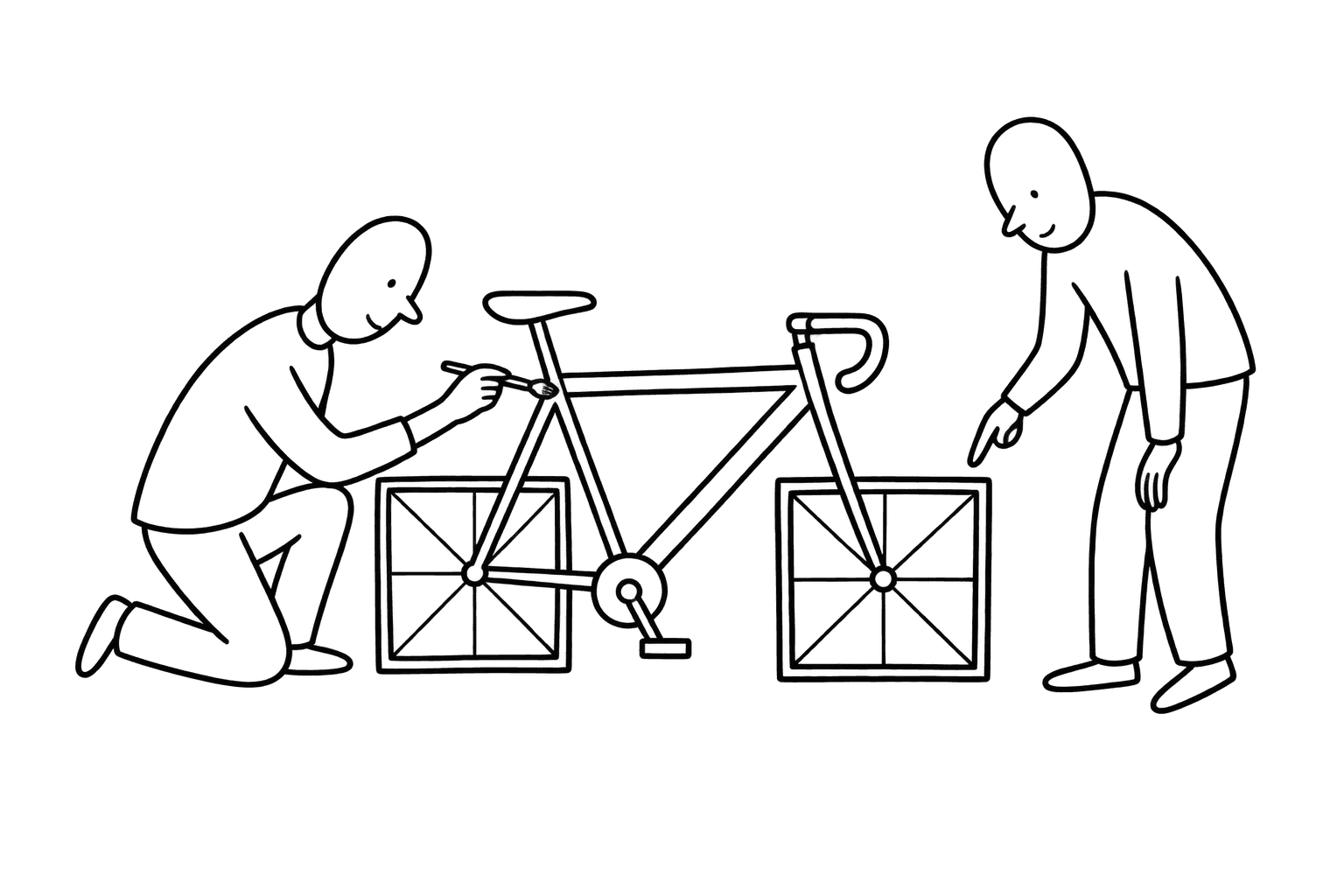
Understand the experience of the person you’re solving a problem for. Focus on what actually improves it. Leave the icing for later. Complex problems often need fewer, simpler pieces than we think.

Two teammates decorate a bicycle with square wheels, overlooking its most important problem.
The racing stripes are excellent. Now, about the wheels.

Bias to action.

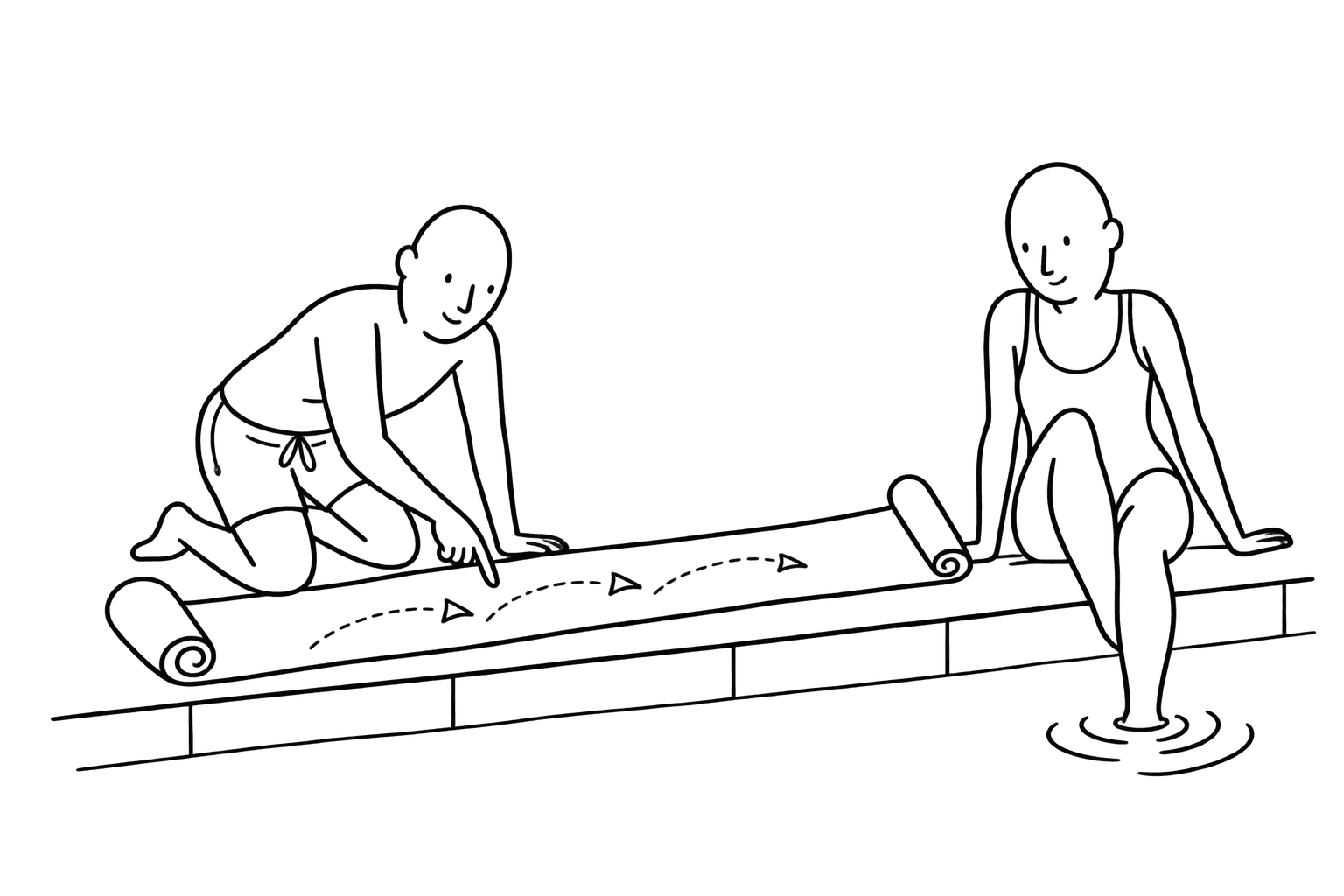
You usually know the next few things you need to do. Do them. Planning should resolve uncertainty, not become a comfortable way to postpone action.

Two teammates plan a dive while one tentatively tests the water.
We could also try getting in the water.

Iteration over perfection.

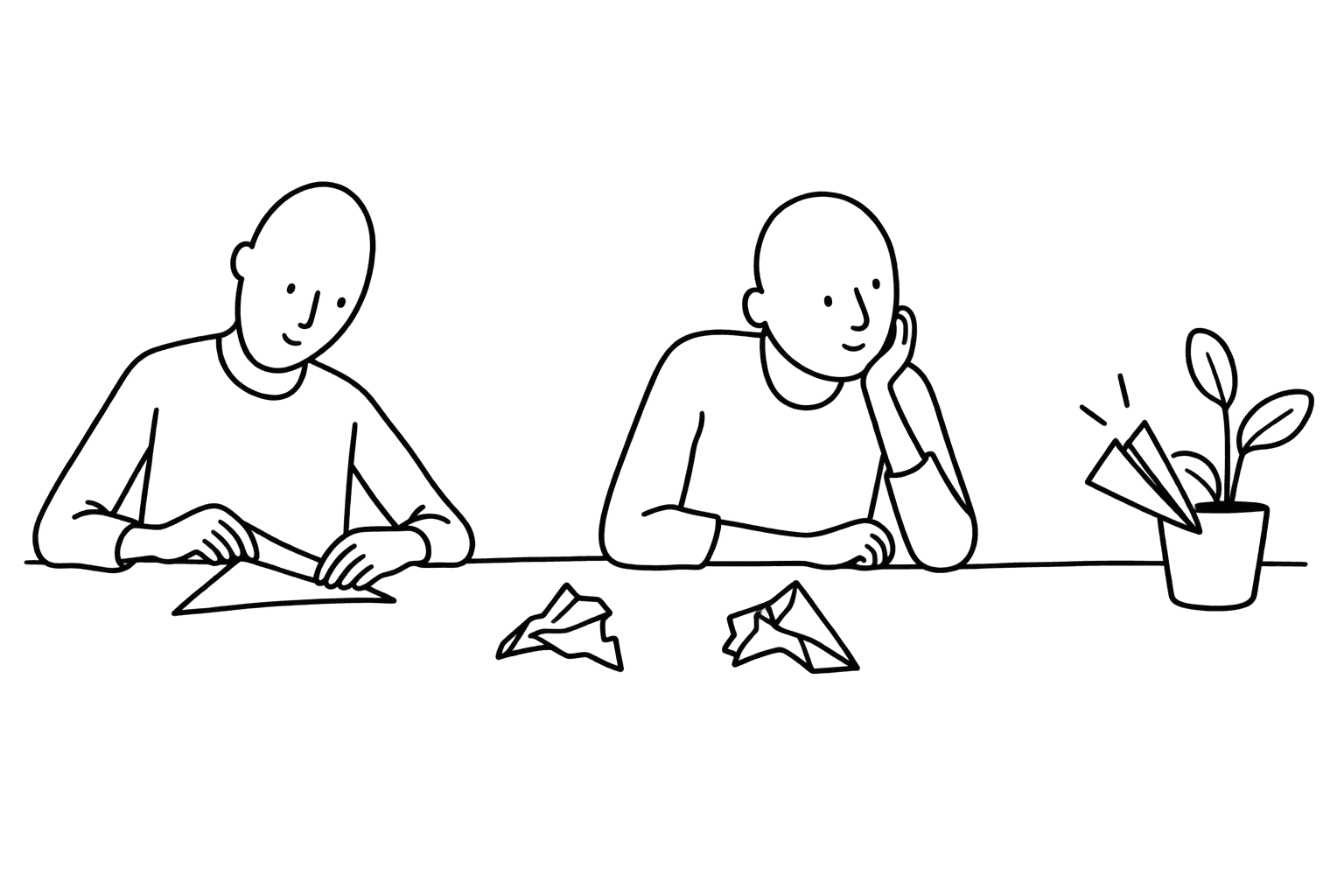
Get something useful into people’s hands, learn from how they use it, and improve it. Keep standards high and feedback loops short.

Two teammates fold a new paper airplane beside their earlier experiments.
The third crash was very informative.

Trust each other.

Be direct. Question ideas without making it personal. Change your mind when the evidence changes. Care about the outcome, help each other get there, and enjoy the people you’re doing it with.

Two teammates coordinate to move a sofa through a narrow doorway.
We could both be right and still be stuck.

Less BS.

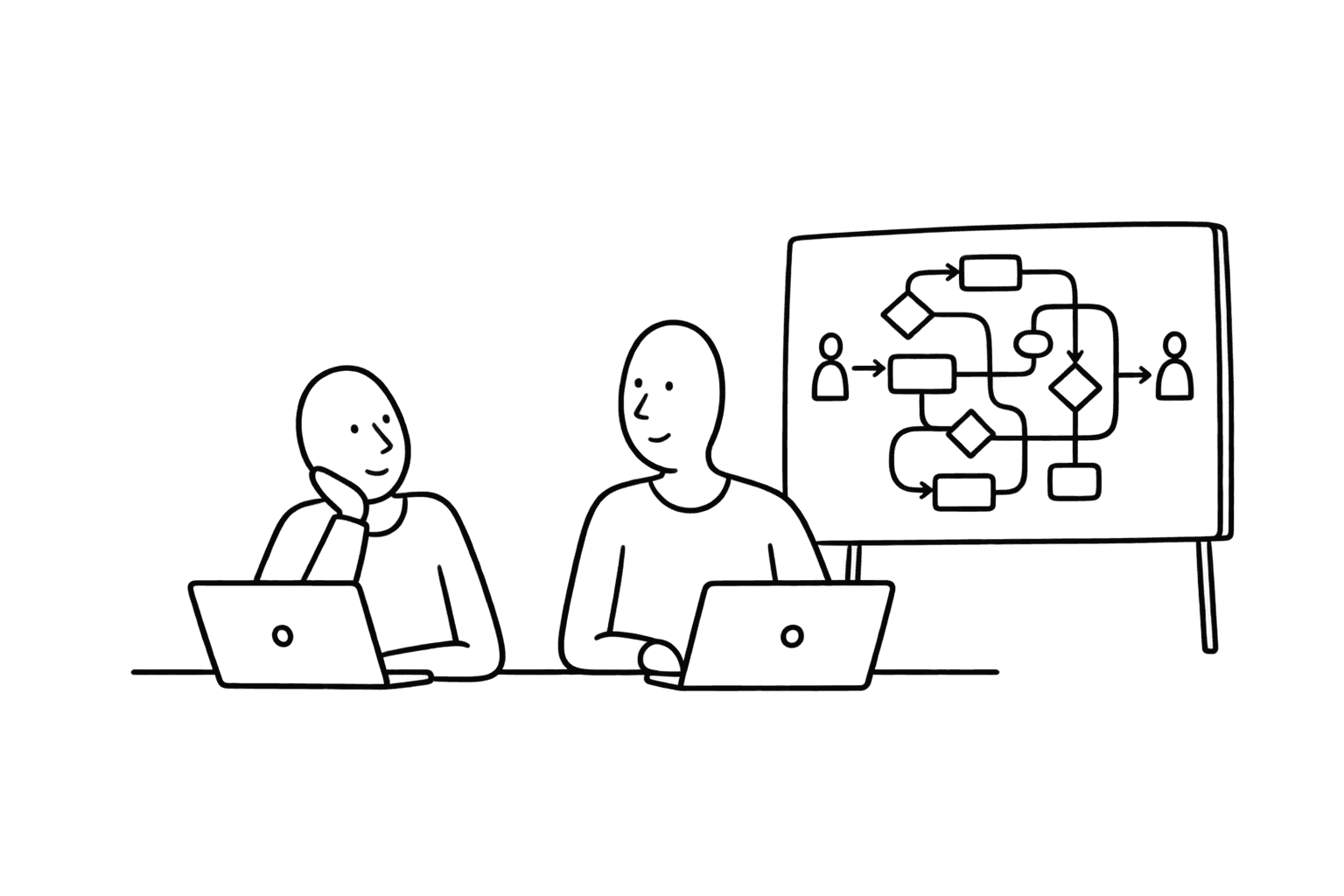
Say what you mean. Keep coordination simple and make it easy for people to help each other. Judge a process by whether it makes the work better.

Two teammates beside an overcomplicated flowchart realize they can simply talk.
Have we tried just asking each other?

I’m optimistic about intelligence becoming cheap and widely available. More people can choose to spend their time creating and doing work with lasting value, without needing a large payroll to get started. We shouldn’t need people stuck doing repetitive work just to keep things running.

If this resonates, let’s talk.